Professional House Cleaning Checklist: The Complete Room-by-Room Guide
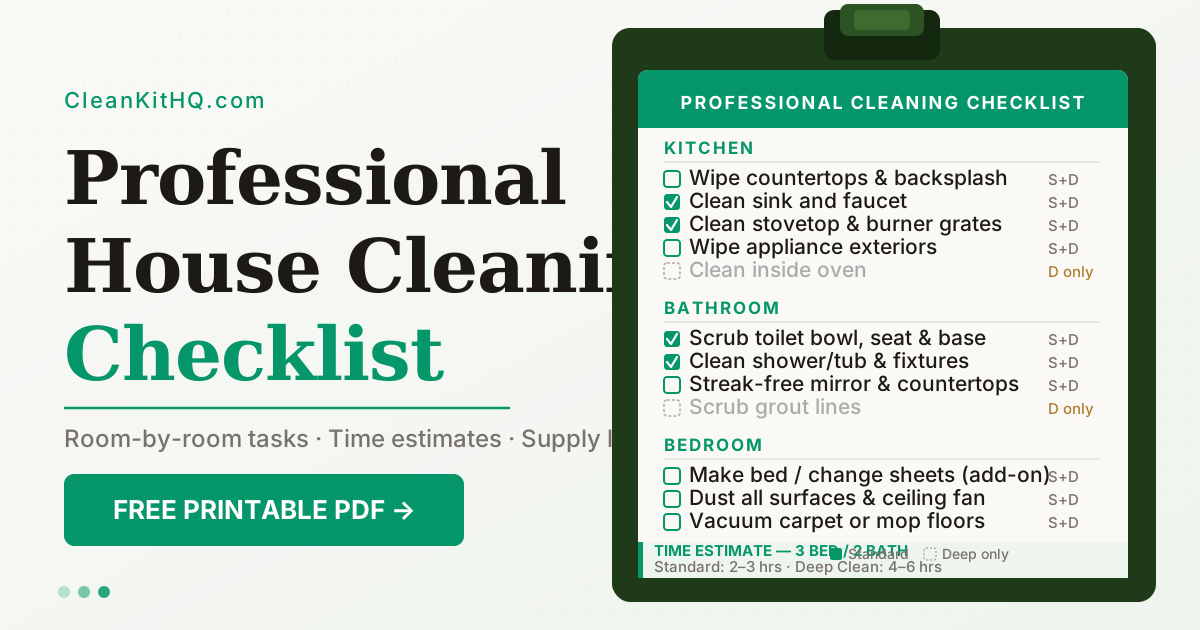
There's not a lot of skill difference between a $25/hour cleaner and a $50/hour cleaner. The wider gap is in the systems they employ, the framework that allows them to move from one house to another and maintain the same standards in each. A professional house cleaning checklist turns forgettable and inconsistent work into a repeatable standard that has clients bragging to their neighbors about.
For me, my first callback came three weeks into running my own cleaning business. A client called because I'd missed a spot, quite literally. I forgot to clean the toilet in the master bath. I drove back across town to clean a toilet that took all of three minutes. That was the last time I worked without a checklist.
Most cleaning businesses skip this step in the early going. Then they get their first angry customer. A client calls because you missed the baseboards in the master bedroom, or your first new hire forgot to clean inside the microwave. It's embarrassing, it costs you time, and it's 100% preventable.
This room-by-room guide covers every nook and cranny needed for a standard clean and a deep clean, with time estimates per room, a complete supply list, and quality control tips for anyone managing a team. We've even included a free printable PDF to hand to every cleaner you hire.
Why Every Cleaning Business Needs a Written Checklist
A professional house cleaning checklist isn't optional. It's the foundation needed for a scalable cleaning business.
Here's what happens without one: two different cleaners, both employed by you, show up to different jobs and do their job in entirely different ways. Neither is wrong, exactly. But one client gets her shower walls scrubbed, and one gets them wiped down with a sponge and Windex. You can imagine which one calls you later about soap scum.
A written checklist solves four real problems:
Consistency. Every job is to the same standard, regardless of which employee shows up—or if you're the one cleaning two separate houses. Clients come to expect that level of quality, and this is what keeps them paying month over month rather than calling the national chain.
Better onboarding for new hires. Hand a new cleaner your list and you can walk away once you've run through it with them on their first job. They know your standards now. No guesswork, no revisiting the same mistakes. They get it.
Fewer callbacks. When every task is written down, nothing gets forgotten. Callbacks cost you money. It's not just travel time or missed opportunity to clean another house, it's reputation and credibility. Customers will not refer the people that do a poor job. It also pays to go above and beyond. To be consistent. Customers like to know what to expect.
Quality control for business owners managing a team. The checklist is how you audit a job before you leave the property. And you should be auditing each and every job. You're not relying on memory. You're checking a list. Every. Single. Time.
A written checklist makes your service look like the professional choice from day one, which matters a lot when you're booking your first cleaning clients.
The Complete Professional House Cleaning Checklist
For every task you see below, you'll find whether it belongs in a standard clean (S), a deep clean (D), or both (S+D). This is how you build your two-tier service menu.
Kitchen Cleaning Checklist
The kitchen is where you'll spend the most time in your average home. Grease travels, as it turns out. Work top to bottom, left to right, every time.
| Task | Standard | Deep Clean |
|---|---|---|
| Wipe all countertops and backsplash | ✓ | ✓ |
| Clean sink and faucet (scrub basin, polish chrome) | ✓ | ✓ |
| Clean stovetop and burner grates | ✓ | ✓ |
| Wipe exterior of fridge, dishwasher, microwave, oven | ✓ | ✓ |
| Clean inside microwave | ✓ | ✓ |
| Wipe cabinet fronts and handles | ✓ | ✓ |
| Wipe small appliances on counter (toaster, coffee maker) | ✓ | ✓ |
| Empty and reline trash can | ✓ | ✓ |
| Sweep and mop floor | ✓ | ✓ |
| Wipe light switches and outlet covers | ✓ | ✓ |
| Spot-clean walls near cooking area | ✓ | ✓ |
| Wipe baseboards | ✓ | ✓ |
| Clean inside oven | — | ✓ |
| Clean inside refrigerator | — | ✓ |
| Pull and clean behind appliances | — | ✓ |
| Degrease range hood filter | — | ✓ |
| Wipe inside cabinet fronts | — | ✓ |
Pro tip: Clean top to bottom in every room. And that's not an idiom, it's quite literal. Start at the top: ceiling fans and top cabinets. End with the floor. If you mop first, you mop twice.
Time estimate: 25–40 minutes for a standard clean. 45–75 minutes for a deep clean. (Source: ZenMaid and Jobber industry averages — treat these as estimates, some kitchens are better/worse than others.)
Bathroom Cleaning Checklist
Bathrooms are where you win or lose clients. A streak-free mirror and a spotless toilet signal to your client that you're thorough. A ring in the toilet bowl says the opposite. Mirrors and toilets are expected though. If you really want to impress, spend your time on grout lines and sink/tub/shower hardware. These are often forgotten, but never are they something a client fails to notice.
| Task | Standard | Deep Clean |
|---|---|---|
| Scrub toilet bowl | ✓ | ✓ |
| Wipe toilet seat top and bottom, tank, base, and behind | ✓ | ✓ |
| Clean shower and tub walls, floor, and fixtures | ✓ | ✓ |
| Wipe glass shower door (squeegee to finish) | ✓ | ✓ |
| Scrub vanity and sink, polish faucet | ✓ | ✓ |
| Clean mirror (streak-free) | ✓ | ✓ |
| Wipe countertops | ✓ | ✓ |
| Empty trash and replace liner | ✓ | ✓ |
| Sweep and mop floor | ✓ | ✓ |
| Wipe light switches | ✓ | ✓ |
| Wipe baseboards | ✓ | ✓ |
| Restock toilet paper (if client provides) | ✓ | ✓ |
| Scrub grout lines | — | ✓ |
| Clean exhaust fan cover | — | ✓ |
| Wipe inside medicine cabinet | — | ✓ |
| Descale showerhead | — | ✓ |
| Launder shower curtain liner | — | ✓ |
Pro tip: Apply your bathroom cleaner, then move to something else for 3–5 minutes before scrubbing. The product does most of the work. Don't scrub harder; scrub smarter.
Time estimate: 20–30 minutes standard clean. 35–55 minutes deep clean.
Bedroom Cleaning Checklist
Bedrooms are fast. Faster than most people expect them to be. The variables here are minimal, and are usually limited to whether or not you're changing the sheets—which should always be priced as an add-on—and how much floor space is currently occupied by things that just don't belong on the floor.
| Task | Standard | Deep Clean |
|---|---|---|
| Make bed or change sheets (add-on service) | ✓ | ✓ |
| Dust all surfaces: nightstands, dressers, shelves | ✓ | ✓ |
| Dust lampshades and bases | ✓ | ✓ |
| Clean mirrors | ✓ | ✓ |
| Vacuum carpet or dust mop/mop hard floors | ✓ | ✓ |
| Vacuum under bed if accessible | ✓ | ✓ |
| Wipe baseboards | ✓ | ✓ |
| Wipe light switches and door handles | ✓ | ✓ |
| Dust ceiling fan blades | ✓ | ✓ |
| Empty trash | ✓ | ✓ |
| Wipe inside closet shelves | — | ✓ |
| Clean window sills and tracks | — | ✓ |
| Clean behind furniture | — | ✓ |
Time estimate: 15–20 minutes standard clean. 25–40 minutes deep clean.
Living Room and Common Areas Checklist
Living rooms are where the variation happens. A home with minimal decor takes 15 minutes. A quick dust and vacuum and you're usually out of there, assuming there are no add-ons like windows or baseboards. A home with 40 framed photos on every surface takes double or triple that. Factor this into your estimate when you do a walkthrough, and before you quote a final price.
| Task | Standard | Deep Clean |
|---|---|---|
| Dust all flat surfaces: coffee table, end tables, shelves, entertainment center | ✓ | ✓ |
| Dust TV screen with dry microfiber (never spray directly on screen) | ✓ | ✓ |
| Straighten couch cushions, vacuum under cushions | ✓ | ✓ |
| Vacuum carpet or mop hard floors | ✓ | ✓ |
| Vacuum rug edges and corners | ✓ | ✓ |
| Dust picture frames and wall decor | ✓ | ✓ |
| Clean glass tabletops | ✓ | ✓ |
| Wipe lampshades | ✓ | ✓ |
| Wipe light switches, outlet covers, door handles | ✓ | ✓ |
| Dust windowsills | ✓ | ✓ |
| Wipe baseboards | ✓ | ✓ |
| Dust blinds or shutters individually | — | ✓ |
| Vacuum upholstered furniture | — | ✓ |
| Wash interior windows | — | ✓ |
Time estimate: 15–25 minutes standard clean. 30–45 minutes deep clean.
Entryway and Hallways Checklist
These are quick, but don't be tempted to skip them. Many do. And clients notice. The entryway is the first and last thing a client sees when she walks in. They'll notice the smudges on the doorframe more than almost anything else in the house.
| Task | Standard | Deep Clean |
|---|---|---|
| Wipe front door interior side | ✓ | ✓ |
| Dust console table, shoe rack, hooks | ✓ | ✓ |
| Clean mirror if present | ✓ | ✓ |
| Sweep, vacuum, or mop floor | ✓ | ✓ |
| Wipe light switches | ✓ | ✓ |
| Wipe stair railing if applicable | ✓ | ✓ |
| Wipe baseboards | ✓ | ✓ |
Time estimate: 5–10 minutes standard clean. 10–15 minutes deep clean.
Laundry Room Checklist
Some clients ask for the laundry room, others don't care. Price it as an add-on or include it in your full-home rate, if you're so inclined. It really doesn't add much time to a clean and could be a nice bonus. That said, always clarify before you start the job whether it's included or not.
| Task | Standard | Deep Clean |
|---|---|---|
| Wipe washer and dryer exteriors | ✓ | ✓ |
| Clean lint trap area | ✓ | ✓ |
| Wipe countertops and utility sink | ✓ | ✓ |
| Sweep and mop floor | ✓ | ✓ |
| Empty trash | ✓ | ✓ |
| Run washer cleaning cycle | — | ✓ |
| Pull machines forward and clean behind | — | ✓ |
Time estimate: 5–10 minutes standard clean. 15–20 minutes deep clean.
Standard Clean vs Deep Clean: What's Included in Each?
A standard clean is maintenance. You're keeping a reasonably clean home clean from week-to-week. It covers all rooms, all surface-level tasks, and runs an average of 1.5–3 hours for a 3-bedroom/2-bath home with a solo cleaner.
A deep clean is a hard reset. You're doing everything in a standard clean plus baseboards throughout, inside appliances, window tracks, grout scrubbing, ceiling fans, behind furniture, and exhaust vents. Budget 3–6 hours for the same 3-bed/2-bath home as a solo cleaner.
| Feature | Standard Clean | Deep Clean |
|---|---|---|
| Countertops and surfaces | ✓ | ✓ |
| Floors swept/mopped | ✓ | ✓ |
| Bathrooms and kitchen | ✓ | ✓ |
| Baseboards throughout | ✓ | ✓ |
| Inside appliances | — | ✓ |
| Grout scrubbing | — | ✓ |
| Behind furniture and appliances | — | ✓ |
| Window tracks | — | ✓ |
| Exhaust fan covers | — | ✓ |
| Average time (3 bed/2 bath) | 1.5–3 hours | 3–6 hours |
One rule to live by: every first-time client gets a deep clean before moving to a recurring standard clean. You don't know what the last cleaner missed or what's been building up behind the furniture or in the oven for the past six months. The deep clean is a fresh start and it makes your job easier, giving you a realistic baseline to start from when you move to a weekly or bi-weekly schedule.
Not sure what to charge for each service? See our full guide on pricing your standard and deep clean services. It's free.
Time Estimates by Room: Your Quick Pricing Reference
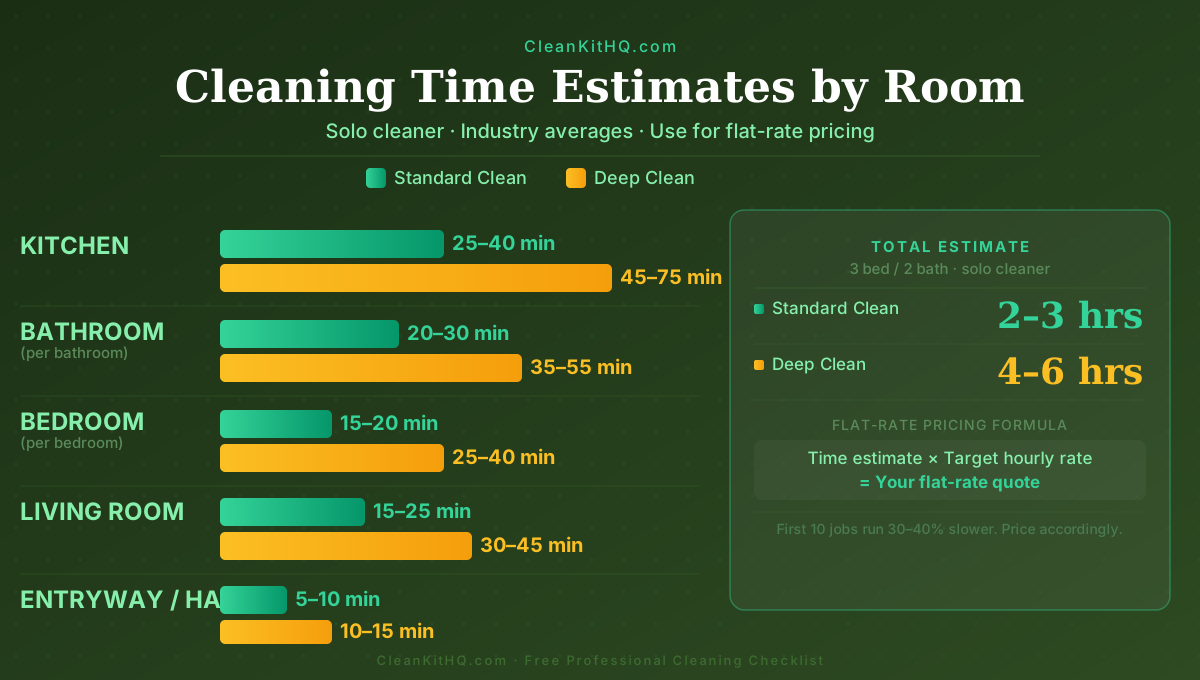
This table gives you some numbers to start from when pricing a job. Add up the rooms in a home, consider your target hourly rate, and you have the basis for a fairly comprehensive quote.
| Room | Standard Clean | Deep Clean |
|---|---|---|
| Kitchen | 25–40 min | 45–75 min |
| Bathroom (per bathroom) | 20–30 min | 35–55 min |
| Bedroom (per bedroom) | 15–20 min | 25–40 min |
| Living room | 15–25 min | 30–45 min |
| Entryway/hallways | 5–10 min | 10–15 min |
| Laundry room | 5–10 min | 15–20 min |
| Total (3 bed/2 bath) | 2–3 hours | 4–6 hours |
Your first 10 jobs will run 30–40% slower than most of these time estimates. That's normal. This is the time to learn the rhythm of the job, to move through a home systematically and collect data. By your 20th clean, most cleaners exceed these benchmarks. Build that learning curve into your early pricing so you're not taking losses while you get up to speed.
Pro tip: Multiply your time estimates by your target hourly earnings to calculate your flat-rate pricing before you quote your next job.
Download the Free Professional Cleaning Checklist PDF
Get all of our room-by-room checklists as a printable PDF you can hand to every cleaner on your team. Print it, laminate it, and clip it to a job folder for each client.
The download includes:
- All six rooms from this guide, formatted as a cleaning service checklist template with standard clean/deep clean columns
- A client walkthrough form for first visits (captures special instructions before you clean)
- A supply list organized by room
- A deep clean add-on sheet you can email to prospective clients
How to Use This Checklist in Your Cleaning Business
Getting the list is step one. Using it consistently is where most cleaners fall short. But quality starts even before you enter someone's home. Start with a pre-visit list of expectations.
Send Clients a Pre-Visit Prep List
Most complaints can be traced back to conditions on arrival, not the cleaning itself. A client who leaves dishes piled in the sink, fragile items on every shelf, and a dog loose in the house is setting you up for a slower, harder job, and one with an outcome neither party is happy with.
Fix it before you arrive. Send this list 24 hours before every visit. You can email or text it.
- Put away any fragile or irreplaceable items
- Clear loose clutter from countertops (papers, mail, small items)
- Remove dishes from the sink
- Secure pets in a room you don't need cleaned, or make arrangements to have them out of the house
- Clear floors in rooms you want vacuumed
Six items. Takes the client two minutes to read but cuts your friction on arrival. It sets expectations that this is a professional service with a process, not someone showing up with a mop and bucket figuring it out as they go.
Print and laminate one copy per employee. A laminated copy in a plastic sleeve slides into a job folder and survives wet counters. Replace it when it shows wear. Don't let any employees use phone screenshots; they're too easy to ignore mid-job.
Use it as a training document for new hires. On their first day, walk them through a real home room-by-room with the list in hand. Don't pause to lecture, just clean alongside them while narrating. One walk-through is worth more than any amount of verbal instruction outside the environment you're cleaning.
Customize the sheet per client. Some clients want the inside of the fridge cleaned every visit. Some never want anyone touching the laundry room. Mark client-specific changes on their version of the list in a different color. Keep one master template and individual client versions separate.
Use it for quality control. Before you leave a job, walk through the list and spot-check. You're looking for anything that got rushed or skipped, which happens, even for industry veterans. Catch it yourself, fix it in minutes, and your client never has to call—and you don't need to come back to fix it. That's the whole game, in a nutshell.
Attach this checklist as an exhibit to your cleaning service contract template. When both you and the client sign off on it, there's not much room for ambiguity in what's included in a standard clean. That protects you from scope creep and unrealistic expectations.
Cleaning Supplies Checklist: What to Bring on Every Job
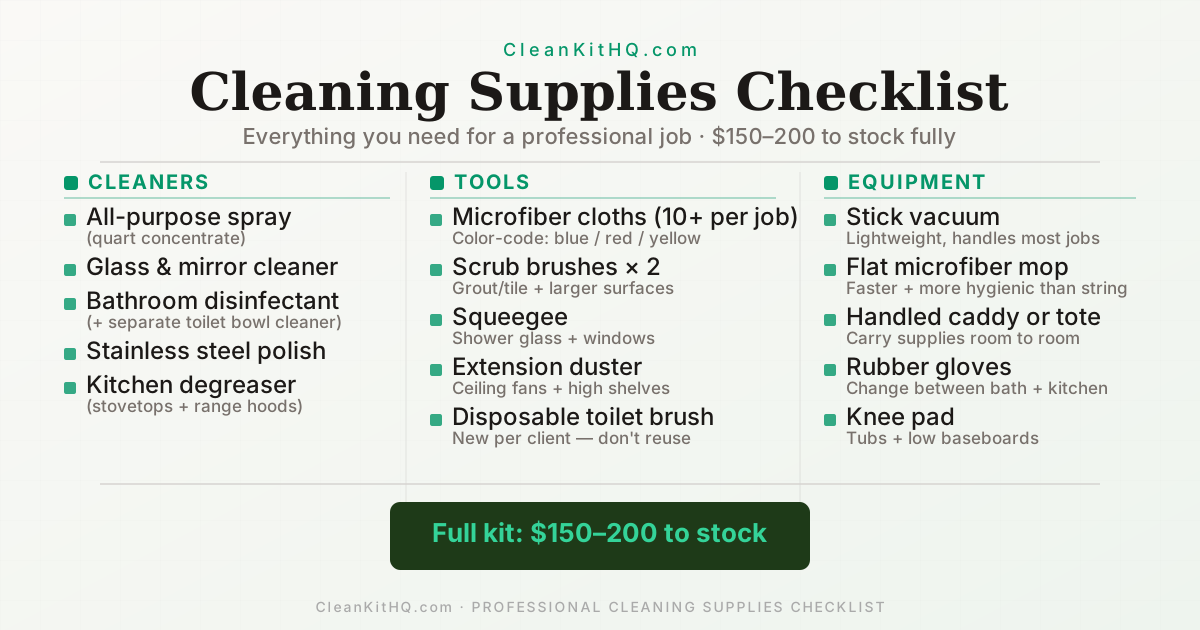
You don't need expensive commercial equipment to run a residential cleaning business. You need the right tools. You need them organized. And you need the processes that set you up for success.
Cleaners
- All-purpose spray (concentrates that you dilute offer significant savings)
- Glass and mirror cleaner
- Bathroom disinfectant (toilet bowl cleaner separate from surface spray)
- Stainless steel cleaner or polish
- Degreaser for kitchen jobs, especially stovetops and range hoods
Tools
- Microfiber cloths — bring at least 10 per job. Color-code them: blue for kitchens, red for bathrooms, yellow for everything else. It sounds fussy until you realize how gross it is to accidentally use the same towel on kitchen counters that you did on the shower.
- Scrub brushes in two sizes: one for grout and tile, one for larger surfaces
- Non-scratch sponges
- Squeegee for shower glass and windows
- Extension duster for ceiling fans and high shelves
- Disposable toilet brushes — don't cheap out here. The look of disgust you'll get from clients who find out you use the same toilet brush on every job tells you why this is necessary.
Equipment
- A lightweight stick vacuum handles most residential jobs well. Canister vacuums work if you need more suction.
- A flat microfiber mop system is faster and more hygienic than a traditional string mop
- A handled caddy or a canvas tote to carry everything from room to room
Extras
- Rubber gloves (change between bathrooms and kitchens). Use blue in bathrooms and yellow in kitchens to avoid accidentally wearing the wrong ones.
- Trash bags in two sizes
- Empty spray bottles for diluting concentrates
- A knee pad for scrubbing tubs and low baseboards
You can stock your full cleaning supply equipment kit for $150–$200 upfront. That covers everything a solo cleaner needs to start out. For a full budget breakdown, including equipment, insurance, and business registration, see our guide to cleaning business startup costs.
If you really want to stand out, read the EPA's Safer Choice product list. It offers safer cleaning products, all certified. Clients often pay a premium for this, and it's worth mentioning in your marketing. It could cost a little more upfront, but it's an excellent differentiation. And while you're at it, check out the OSHA cleaning industry safety guidance. It covers chemical handling, ventilation, and PPE requirements worth reviewing before your first job. The CDC's cleaning and disinfecting guidelines give you solid protocols to reference if a client asks about sanitization vs. disinfection — and they do ask. Knowledge about standards helps you craft your own. And that knowledge sets you apart from others in your area.
The 60-Second Walkthrough Before You Leave
Most complaints aren't about bad cleaning. They're about one thing that got missed in the last 10 minutes of a job when you're tired and sloppy. This check catches those misses before you walk out the door.
- Floors. Any debris, streaks, or missed corners?
- Eye-level surfaces. Any dust, smears, or spots?
- Trash. Empty? New liner in place?
If all three pass every room, you're done. If something isn't right, fix it before you leave. This is the same quality control move whether you're a solo cleaner or auditing your team's work before leaving. It feels slower. It is slower. But over a month's worth of jobs, it's the thing that actually allows you to move faster and take on more — by not having to take a step back to take a step forward. Plus, it really is that one simple thing that keeps your reviews as clean as the houses you're in and your recurring clients locked in.
Wrapping Up
A professional house cleaning checklist isn't a shortcut. It's the system that makes your 100th job as good as your first.
Use it as a training document. Use it for quality control. Attach it to your client contracts so that everyone's expectations align on day one. And grab the free printable PDF above to get started. You'll be happy you did.
Ready to level up? If you're building a cleaning business from scratch, the CleanKitHQ Starter Kit includes this checklist alongside two client contracts, a flat-rate pricing calculator, and a 30-day marketing plan for just $47.
See the opportunity in your city
Get a free AI-powered market snapshot with pricing, competition, and startup cost data for your area.